
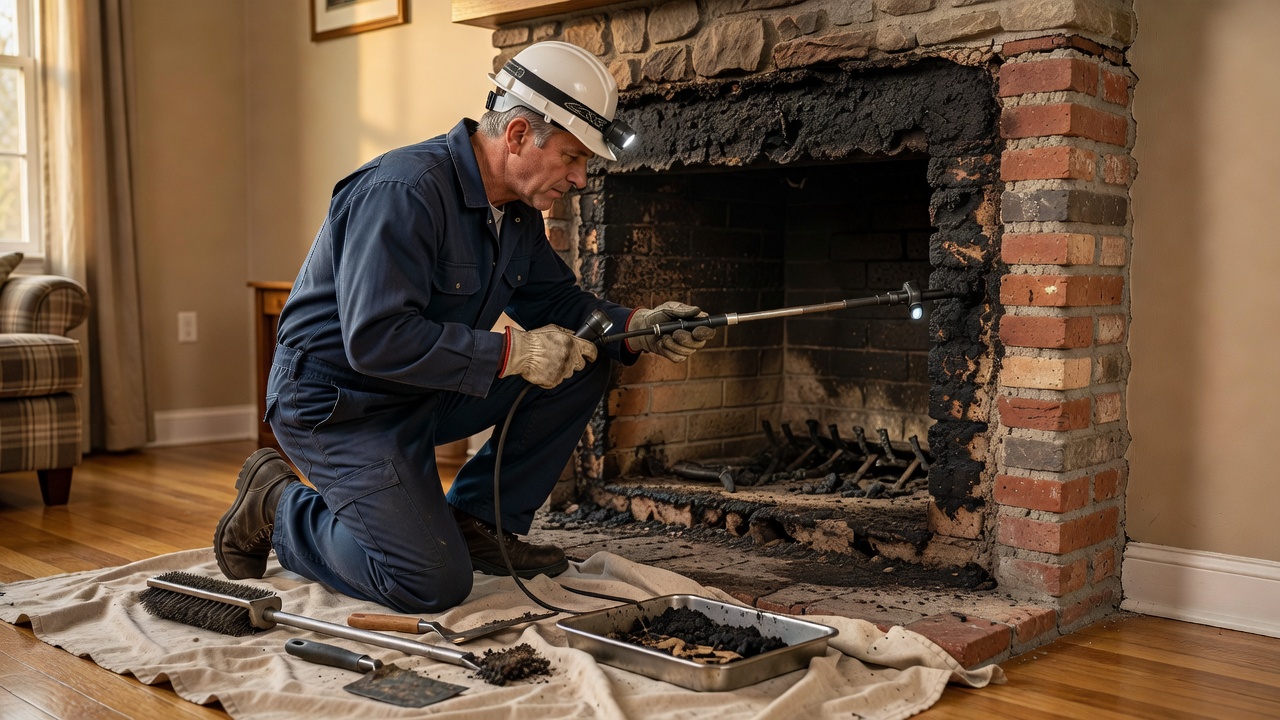
What’s Really Inside Your Chimney Flue? Why Creosote Removal in Bergen County, NJ Is More Complicated Than You Think
Many homeowners assume chimney sweeping is a simple process. A technician arrives with a brush, removes some soot, and the job is done.
In reality, creosote removal is far more complex.
The type of creosote inside your chimney depends on how often you use your fireplace, the type of wood you burn, your chimney’s design, and how efficiently your system drafts. Using the wrong cleaning method doesn’t just leave residue behind it can create a serious fire hazard.
This is especially important in Bergen County, where many homes in Hackensack, Teaneck, Maywood, and surrounding communities still have older clay-tile-lined chimneys that were built long before today’s fireplace efficiency standards.
According to NFPA 211, chimneys serving solid-fuel appliances should be inspected at least once every year. The Chimney Safety Institute of America (CSIA) classifies creosote into three different levels, each requiring a different cleaning approach.
Treating every chimney the same is not only ineffective—it can put your home and family at unnecessary risk.
Six Common Creosote Problems Found in Bergen County Homes
1. First-Degree Creosote That Keeps Coming Back
Common Symptoms
- Light, flaky soot inside the chimney
- Creosote returns within months of a professional cleaning
- Fireplace doesn’t draft efficiently
Most Likely Cause
Recurring first-degree creosote often points to poor chimney draft rather than inadequate cleaning.
Cold air entering through an improperly sealed damper, an oversized flue, or an uninsulated exterior chimney can reduce flue temperatures. As smoke cools too quickly, it condenses and creates fresh creosote.
Many factory-built fireplaces installed throughout Bergen County during the 1980s and 1990s experience these airflow problems.
The Right Solution
A qualified chimney professional should do more than clean the flue.
A comprehensive inspection should include:
- Draft testing
- Damper inspection
- Chimney liner evaluation
- Verification that the liner size matches the fireplace or appliance
Correcting airflow problems helps reduce future creosote buildup.
Prevention Tips
- Burn only seasoned hardwood with a moisture content below 20%.
- Build a hot fire for the first 20 minutes before reducing airflow.
- Schedule annual chimney inspections and cleanings.
2. Second-Degree Creosote: Hardened Tar Deposits
Common Symptoms
- Hard, shiny black deposits
- Glazed appearance inside clay chimney liners
- Standard chimney brushes cannot remove the buildup
Most Likely Cause
Second-degree creosote usually develops after repeated low-temperature fires caused by:
- Burning green or wet firewood
- Restricting airflow too early
- Closing the damper prematurely
- Allowing fires to smolder for long periods
As smoke cools inside the chimney, tar condenses and hardens into stubborn deposits.
The Right Solution
Removing second-degree creosote generally requires:
- Rotary power sweeping equipment
- Professional chemical treatments
- Multiple service visits for severe buildup
Heavy glazing rarely disappears after one cleaning. Be cautious of contractors promising same-day removal for heavily glazed chimneys.
Prevention Tips
Avoid smoldering fires and maintain adequate airflow throughout the burn cycle.
3. Third-Degree Creosote: A Serious Fire Hazard
Common Symptoms
- Thick tar-like buildup
- Honeycomb-shaped creosote deposits
- Strong smoky odors even when the fireplace isn’t being used
CSIA-certified chimney technicians frequently discover this level of buildup in chimneys that have gone several years without professional maintenance.
Most Likely Cause
Years of untreated second-degree creosote eventually harden into thick combustible deposits.
The Right Solution
Depending on the severity, treatment may involve:
- Specialized chemical applications
- Rotary mechanical cleaning
- Manual extraction
- Chimney relining if heat damage has occurred
For many Bergen County homes, replacing a damaged six-inch stainless steel chimney liner typically costs between $1,800 and $2,800, depending on chimney height and configuration.
Prevention Tips
Annual chimney cleaning remains the most effective way to prevent dangerous third-degree creosote from developing.
4. Hidden Damage from Previous Chimney Fires
Common Symptoms
- Cracked clay flue tiles
- Spalling or flaking inside the chimney
- Smoke odors in adjacent rooms
- Damage visible only during camera inspection
Most Likely Cause
Many homeowners never realize they’ve experienced a chimney fire.
Creosote can ignite at temperatures around 451°F, while chimney fires may exceed 2,000°F, causing hidden damage inside the flue without obvious signs outside the home.
The Right Solution
A Level 2 chimney inspection with a professional camera system is the accepted industry standard whenever a chimney fire is suspected.
If the chimney liner has cracked or separated, cleaning alone cannot restore safe operation. Repairs or relining are necessary before using the fireplace again.
Prevention Tips
Keeping creosote below dangerous levels through annual cleaning significantly reduces the risk of chimney fires.
5. Chimney Liner Gaps That Encourage Creosote Buildup
Common Symptoms
- Heavy creosote accumulation in one section of the chimney
- Ongoing draft problems
- Uneven fireplace performance
Most Likely Cause
Many older chimneys throughout Maywood, Teaneck, and neighboring communities contain offsets or gaps created during previous renovations or extensions.
These irregularities disrupt airflow and allow more smoke to contact the chimney walls, increasing creosote formation.
The Right Solution
A camera inspection identifies the exact location of damaged or misaligned liner sections.
Repairs may include:
- Stainless steel collar installation
- Partial liner repair
- Complete chimney relining
6. Creosote Left Behind After Converting to Gas
Common Symptoms
- Smoke odors after installing a gas fireplace
- Creosote discovered during inspection
- Unexpected liner deterioration
Most Likely Cause
Some homeowners convert from wood-burning fireplaces to gas without cleaning the existing chimney first.
Gas appliance exhaust contains mild acids that react with leftover creosote, accelerating chimney deterioration.
The Right Solution
Every chimney should be professionally cleaned and inspected before or immediately after a gas appliance conversion.
This important step is frequently overlooked during fireplace upgrades.
How to Choose a Chimney Contractor Who Gets It Right
Choosing the right chimney company is just as important as scheduling the cleaning itself.
Look for CSIA Certification
The Chimney Safety Institute of America (CSIA) certification remains one of the industry’s highest professional credentials.
A CSIA-certified chimney sweep has completed training covering:
- NFPA 211 safety standards
- Combustion science
- Chimney inspections
- Fireplace safety
- Creosote identification and removal
Always ask for the technician’s certification number and verify it before scheduling service.
Ask About Camera Inspections
Professional chimney cameras allow technicians to identify:
- Hidden chimney liner damage
- Cracks
- Heavy creosote deposits
- Structural defects
If a contractor recommends expensive repairs without showing photographic or video evidence, consider obtaining a second opinion.
Know the Warning Signs
Use caution if a company:
- Quotes chimney cleaning without asking how often you use your fireplace.
- Doesn’t explain the different creosote classifications.
- Doesn’t recommend a camera inspection for significant buildup.
- Offers prices that seem unusually low.
- Pressures you into immediate repairs without documentation.
An experienced chimney professional should explain their findings clearly and provide written recommendations not sales pressure.
Typical Creosote Removal Costs in Bergen County
While every chimney is different, homeowners can generally expect the following price ranges:
| Service | Typical Cost |
|---|---|
| Level 1 Chimney Inspection & Sweep | $175–$275 |
| Level 2 Camera Inspection | Additional $100–$175 |
| Second-Degree Creosote Removal | Varies based on severity |
| Stainless Steel Chimney Relining | Approximately $1,800–$2,800 |
Actual pricing depends on chimney height, accessibility, the amount of creosote present, and whether repairs are needed.
Frequently Asked Questions
How often should creosote be removed?
The National Fire Protection Association recommends having your chimney inspected annually. If creosote is present, it should be professionally removed before it becomes hazardous.
Can I remove creosote myself?
Light soot may be removable with homeowner chimney brushes, but second- and third-degree creosote require specialized equipment and professional expertise.
Is every chimney cleaning the same?
No. Different types of creosote require different cleaning techniques. A professional inspection determines the safest and most effective removal method.
Why is a chimney camera inspection important?
Camera inspections allow technicians to identify hidden cracks, damaged liners, and heavy creosote deposits that cannot be seen during a basic visual inspection.
What type of firewood creates the least creosote?
Seasoned hardwood with a moisture content below 20% burns more efficiently, producing less smoke and significantly reducing creosote buildup.
Schedule Your Professional Chimney Inspection Today
Creosote buildup is one of the leading causes of chimney fires, but it’s also one of the easiest problems to prevent with regular maintenance.
If you live in Hackensack, Teaneck, Maywood, or anywhere in Bergen County, annual chimney inspections and professional creosote removal can help protect your home, improve fireplace efficiency, and prevent costly repairs.
At Chimney Hackensack, our CSIA-certified technicians perform thorough chimney inspections using professional camera equipment on every visit. We’ll identify the exact type of creosote in your chimney, explain its condition, and recommend only the services your system truly needs.
Contact Chimney Hackensack today to schedule your free chimney inspection consultation. We provide honest assessments, detailed documentation, transparent pricing, and professional chimney care you can trust.