
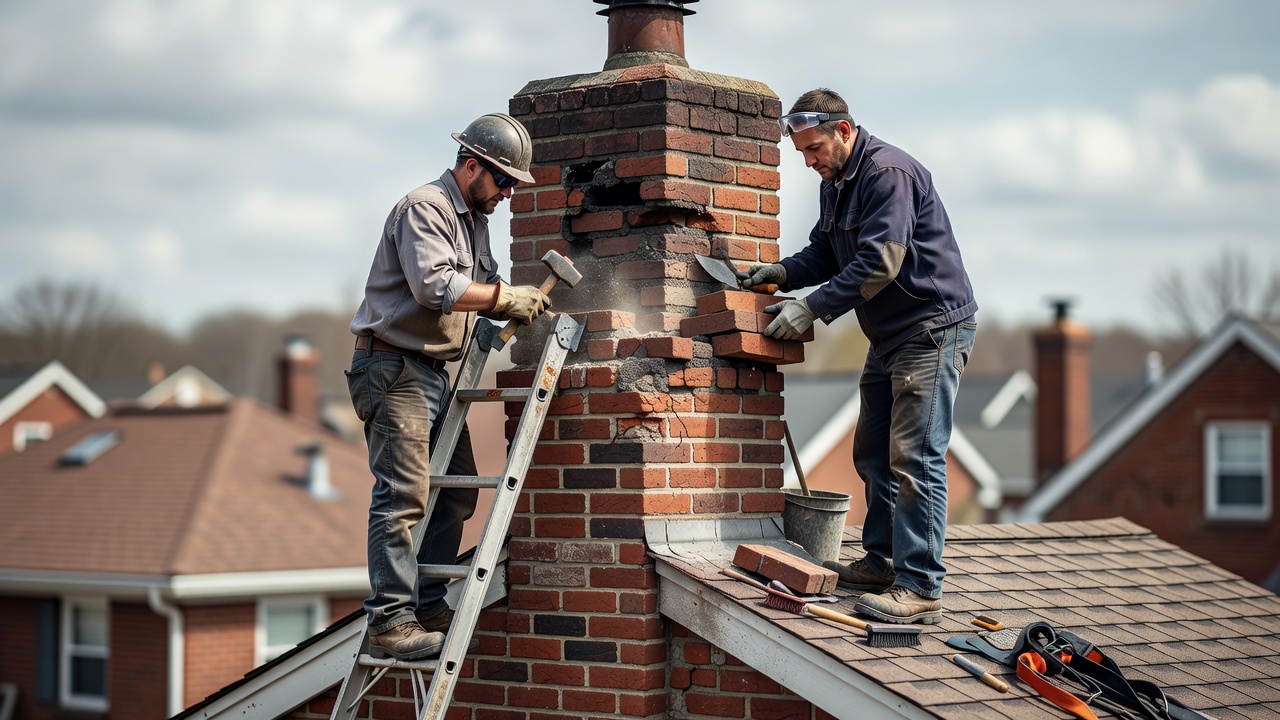
Your Hackensack Chimney Is Telling You Something: Here’s How to Read the Signs
Most masonry chimney damage does not begin with a dramatic crack that you can spot from the driveway. It develops gradually through New Jersey winters, freeze-thaw cycles, and years of deferred maintenance. A small repointing job can eventually become a full crown rebuild if the underlying problem is ignored. Homeowners in River Edge and surrounding Bergen County communities often live in older Colonial and Cape Cod homes with chimneys that have been exposed to the elements for decades. Knowing what to look for can help you identify problems before they become more expensive to repair.
Why Masonry Chimney Damage Gets Worse
Brick and mortar are porous materials, which means water can work its way into the chimney structure. Repeated freezing and thawing can then expand existing cracks and weaken mortar joints. Water intrusion is one of the major causes of masonry chimney deterioration.
A CSIA-certified technician can identify problems that may not be obvious from the ground. The earlier damage is identified, the more options you may have for addressing it before the next heating season.
Warning Signs That Your Chimney May Need Repair
White staining on the brick face
White, chalky staining is known as efflorescence. It occurs when water moves through masonry and leaves mineral deposits on the surface as it evaporates. A small isolated area may not require immediate repair, but recurring or widespread staining can indicate ongoing moisture intrusion. If it keeps returning, have the chimney professionally evaluated.
Recessed, soft, or crumbling mortar joints
Mortar joints that appear deeply recessed or crumble when touched can indicate deterioration. Damaged joints allow more water to enter the chimney and can eventually affect surrounding brickwork. Early tuckpointing can be less extensive than repairs required after the masonry has deteriorated further.
Spalling brick
Spalling occurs when portions of the brick face begin to chip, flake, or break away. Water trapped inside the brick can freeze and expand, causing the surface to deteriorate. If you notice pieces of brick around the chimney or gutters, the masonry should be evaluated by a professional.
A cracked or deteriorating chimney crown
The crown covers the top of the chimney around the flue opening and helps direct water away from the masonry. Cracks, missing sections, or deteriorated edges can allow water to enter the structure. A professional should evaluate significant crown damage before it spreads to the brickwork below.
Rust on the firebox or damper
Orange or brown rust on the firebox, damper, or smoke shelf can indicate that moisture is reaching areas that should remain dry. The source could involve the chimney cap, crown, flashing, or another part of the system. Identifying the source is important because replacing the rusted component alone may not solve the underlying problem.
Water in the firebox after rain
Water entering the firebox after rainfall is not normal. It can indicate problems with the chimney cap, crown, flashing, or masonry. This should be evaluated rather than addressed with temporary caulking alone.
Interior wall or ceiling stains
Water entering through the chimney can eventually appear as stains or peeling paint on walls and ceilings near the chimney. If the staining appears after rain or snow and is located close to the chimney, a professional inspection can help determine whether the chimney is the source.
Visible flashing problems
Flashing creates a weatherproof barrier where the chimney meets the roof. Gaps, buckling, separation, or deterioration can allow water to enter the roof structure around the chimney. Flashing should be assessed carefully before the problem leads to interior water damage.
What the Chimney Repair Process Looks Like
A proper repair should begin with an inspection rather than an immediate repair recommendation. Depending on the chimney’s condition and history, a technician may perform a Level 2 inspection that includes video examination of the flue.
The exterior masonry should also be evaluated from the roofline. This helps determine whether the problem involves mortar joints, damaged bricks, the crown, flashing, or multiple components.
Tuckpointing involves removing deteriorated mortar and replacing it with new mortar appropriate for the existing masonry. Spalled bricks may need to be removed and replaced with matching units. Crown repairs can range from coating an otherwise sound crown to rebuilding a severely deteriorated crown. Flashing may also need to be repaired or replaced when it is contributing to water intrusion.
What Chimney Repairs Can Cost in Bergen County
Repair costs depend on the extent of the damage, chimney height, access, and the amount of material that needs to be replaced. Typical ranges provided for the Hackensack and River Edge area include:
- Tuckpointing: $400 to $900
- Spalling brick replacement: $600 to $1,500
- Crown rebuild: $300 to $600
- Full flashing replacement: $400 to $900
These are general ranges rather than guaranteed quotes. A professional inspection is necessary to determine the actual scope of work.
Delaying repairs can allow water intrusion to affect additional portions of the chimney, potentially increasing the eventual repair scope.
Schedule a Chimney Inspection Before the Damage Gets Worse
If you are seeing recurring efflorescence, crumbling mortar, spalling brick, crown damage, water inside the firebox, or stains near the chimney, it is better to have the system evaluated before the problem progresses.
Chimney Hackensack serves River Edge, Hackensack, Teaneck, Maywood, and surrounding Bergen County communities. Contact us through chimneyhackensack.com to schedule an inspection and get a clear assessment of what your chimney needs before the damage becomes more extensive.
Related from Chimney Hackensack NJ: Chimney Sweep Service in Hackensack, NJ · Chimney Cleaning in Hackensack, NJ · Chimney Repair in Hackensack, NJ