
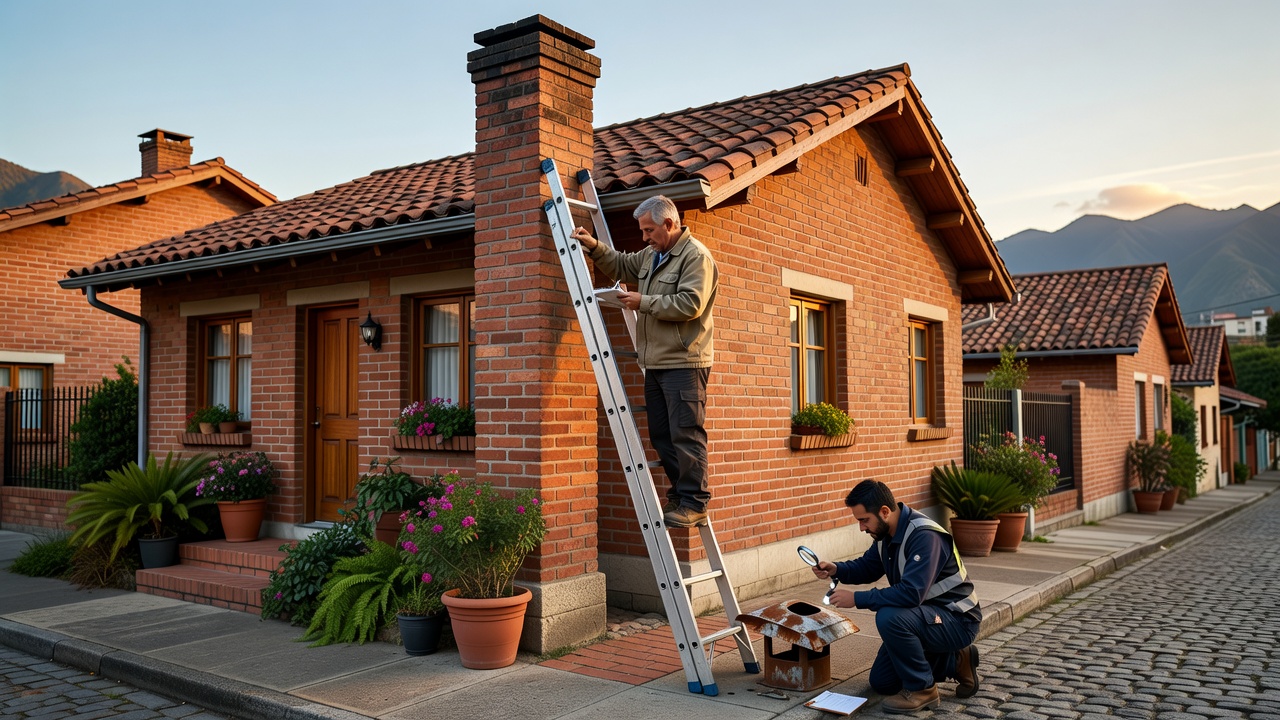
Chimney Cap Installation Bogota NJ: What Homeowners Should Know
A missing or damaged chimney cap is easy to overlook. But an open chimney can allow rain, snow, leaves, and animals to enter the chimney system. Over time, moisture can contribute to deterioration of masonry and other chimney components.
For homeowners considering chimney cap installation in Bogota, NJ, the first question is not simply which cap to buy. It is whether the existing chimney is in suitable condition for a new cap and whether the work can be performed safely.
Some homeowners can identify an obvious problem from the ground. Roof access, chimney inspection, and installation work are different matters. Knowing where to stop can prevent an inexpensive maintenance job from becoming a roof or chimney repair problem.
Before You Start
There are a few things to check before arranging chimney cap installation.
First, look at the chimney from the ground. Binoculars or a phone camera with zoom can help you determine whether a cap appears to be missing, tilted, damaged, or heavily corroded.
Second, consider whether the chimney has been inspected recently.
A chimney cap protects the top of the chimney, but it does not determine the condition of the flue, smoke chamber, liner, crown, flashing, or masonry below it.
CSIA guidance recommends annual chimney inspection, with cleaning and repairs performed when needed. A routine Level 1 inspection does not automatically mean that a camera must be used. The inspection level and methods depend on the condition and circumstances of the chimney.
Check the Cap from the Ground
Before anyone climbs onto the roof, look for obvious problems.
You may notice:
- A completely missing cap
- A visibly tilted cap
- Damaged or missing mesh
- Heavy corrosion
- Loose components
- A cap that appears to have shifted
- Debris around the chimney opening
- Visible masonry deterioration near the chimney top
Do not assume that a cap that looks intact from the ground is functioning correctly. Some problems cannot be identified without closer examination.
At the same time, there is no need to climb onto a roof simply to confirm something that can already be seen safely from the ground.
Do You Need to Measure the Flue?
If a new cap is being ordered, accurate dimensions matter.
Cap design depends on the chimney configuration. A single-flue chimney may use a cap designed for an individual flue, while a multi-flue chimney may require a different termination design.
Do not rely on an assumed dimension such as 8×8 or 8×13 simply because it is common in some masonry chimneys. The actual installation should be measured.
If the chimney has a custom configuration, damaged flue tile, a metal liner, or a larger chimney chase, a professional measurement can help ensure the replacement component is appropriate.
Choosing a Chimney Cap Material
Chimney caps are available in several materials, including galvanized steel, stainless steel, and copper.
CSIA notes that stainless steel and copper caps generally last longer than regular galvanized-steel caps and can carry longer warranties.
The right material depends on the chimney, budget, appearance, exposure, and installation requirements.
Do not choose a cap based solely on the lowest purchase price. A cap that does not fit correctly or is incompatible with the chimney can create other problems.
What About the Mesh?
Many chimney caps incorporate a mesh screen.
The screen can help keep animals, leaves, and other debris out of the chimney while allowing the system to vent properly.
However, the appropriate screen and termination design depend on the chimney and appliance. A homeowner should not assume that one mesh opening size is appropriate for every chimney.
If a cap or screen appears restrictive, damaged, or incorrectly sized, have the termination evaluated rather than modifying the screen yourself.
Can You Install the Cap Yourself?
Some chimney caps are designed for relatively simple attachment to an existing flue or chimney top.
That does not mean roof installation is automatically a safe DIY project.
The major issue is often not the cap itself. It is roof access.
A chimney may be located on a steep or high roof where a fall can cause serious injury. Working around clay flue tile, masonry, metal liners, and existing sealants can also create additional risks.
If reaching the chimney requires climbing onto a roof, especially a steep or difficult-to-access roof, professional installation is usually the more appropriate choice.
Do not modify a flue tile simply to make an improperly sized cap fit. Do not cover a damaged chimney crown with sealant merely to make a cap installation possible.
If the chimney top needs repair, address that condition before installing the new termination.
Check the Crown Before Installing a New Cap
The chimney crown and cap perform different functions.
The crown helps shed water away from the chimney structure. The cap protects the chimney opening and can help keep precipitation, animals, and debris out.
A damaged crown can therefore remain a source of water intrusion even after a new cap is installed.
CSIA’s Level 1 inspection guidance specifically calls for examination of the general condition of the chimney crown and flashing when performing the top examination.
If the crown is cracked or deteriorated, ask the professional whether it needs repair before or as part of the cap project.
What If the Chimney Has Been Open for a Long Time?
A missing cap does not automatically prove that the chimney has suffered interior damage.
However, an open chimney has been exposed to precipitation and debris, so the condition should be considered when evaluating the system.
Water can affect masonry, mortar, metal components, and other parts of a chimney. The actual extent of any damage needs to be determined through inspection rather than assumed from the missing cap alone.
If the fireplace has not been inspected recently, this is a good opportunity to have the chimney evaluated before returning it to regular use.
Do You Need a Level 1 Inspection?
A Level 1 inspection is generally used when the chimney and appliance have not undergone significant changes and the readily accessible portions can be examined.
It is commonly used for routine annual chimney inspections.
A Level 2 inspection is more extensive and may be appropriate under circumstances such as a property sale, relining, a chimney or building fire, certain weather or seismic events, or an operating malfunction that could have caused damage.
A Level 2 inspection includes video scanning or a similar examination of the chimney interior.
Therefore, a missing chimney cap does not automatically mean that a Level 2 inspection is required.
The appropriate inspection level depends on what else is happening with the chimney.
When Should You Call a Professional?
Professional help is appropriate when:
- The chimney crown is cracked or deteriorated
- The chimney has multiple flues
- The flue dimensions are difficult to determine
- The chimney has a metal liner or factory-built system
- There is evidence of animal activity
- Debris is visible inside the chimney
- The cap has become detached
- Masonry is loose or deteriorating
- The chimney has not been inspected recently
- Roof access is difficult or unsafe
- You suspect a previous chimney fire
- The fireplace is producing smoke or has draft problems
A professional can determine whether you need only a cap replacement or whether another part of the chimney requires attention.
What About Permits in Bogota?
Do not assume that every chimney-cap project has the same permit requirements.
New Jersey’s Uniform Construction Code distinguishes between work that requires a construction permit and certain categories of minor or ordinary maintenance work. The applicable requirements depend on the nature and scope of the project.
New Jersey currently uses the 2024 International Residential Code, NJ edition, for one- and two-family dwellings. The current code became effective August 17, 2026.
Before starting exterior chimney work, ask the appropriate local construction official whether the specific project requires a permit or inspection.
That is more reliable than assuming that every cap installation falls into the same category.
What Does Chimney Cap Installation Cost?
There is no reliable universal price for chimney cap installation in Bogota.
The cost can depend on:
- Cap material
- Single- or multi-flue configuration
- Custom sizing
- Chimney dimensions
- Roof access
- Existing chimney condition
- Crown repairs
- Masonry repairs
- Whether an inspection is also required
A basic replacement and a custom multi-flue installation are not equivalent jobs.
If you receive an estimate, ask whether the price includes the cap, installation, fasteners or attachment method, removal of the old cap if applicable, and any required repairs.
If additional work is recommended, ask for that work to be itemized separately.
What If the Fireplace Smokes After a New Cap Is Installed?
Do not automatically assume the cap is the cause.
Smoke entering the room can result from several conditions, including draft problems, an obstruction, appliance or chimney configuration, inadequate combustion air, or other venting issues.
If the fireplace begins smoking after installation, stop using it until the cause has been determined.
Do not simply remove the cap or modify its screen based on a guess. A professional can determine whether the termination is restricting the system or whether the underlying problem is elsewhere.
Keep the Chimney Cap in Perspective
A chimney cap is an important component, but it is not a complete chimney maintenance system.
Installing a new cap does not repair:
- A cracked flue liner
- Deteriorated mortar
- A damaged crown
- Defective flashing
- Structural masonry problems
- Existing blockages
- A damaged damper
- Problems with the appliance or venting system
The purpose of the installation is to provide an appropriate chimney termination and protect the system from conditions the cap is designed to control.
The Bottom Line for Bogota Homeowners
If your chimney cap is missing or damaged, start with a safe ground-level assessment.
If the chimney appears to have other problems, the roof is difficult to access, or the chimney has not been inspected recently, have a qualified professional evaluate it before installation.
A properly fitted cap can help keep precipitation, animals, and debris out of the chimney. But the cap should be considered part of the larger chimney system rather than a replacement for inspection and maintenance.
For homeowners planning chimney cap installation in Bogota, NJ, the best approach is to verify the chimney configuration, check the condition of the crown and masonry, confirm the appropriate inspection level, and determine whether local construction requirements apply before work begins.
Related from Chimney Hackensack NJ: Chimney Sweep Service in Hackensack, NJ