
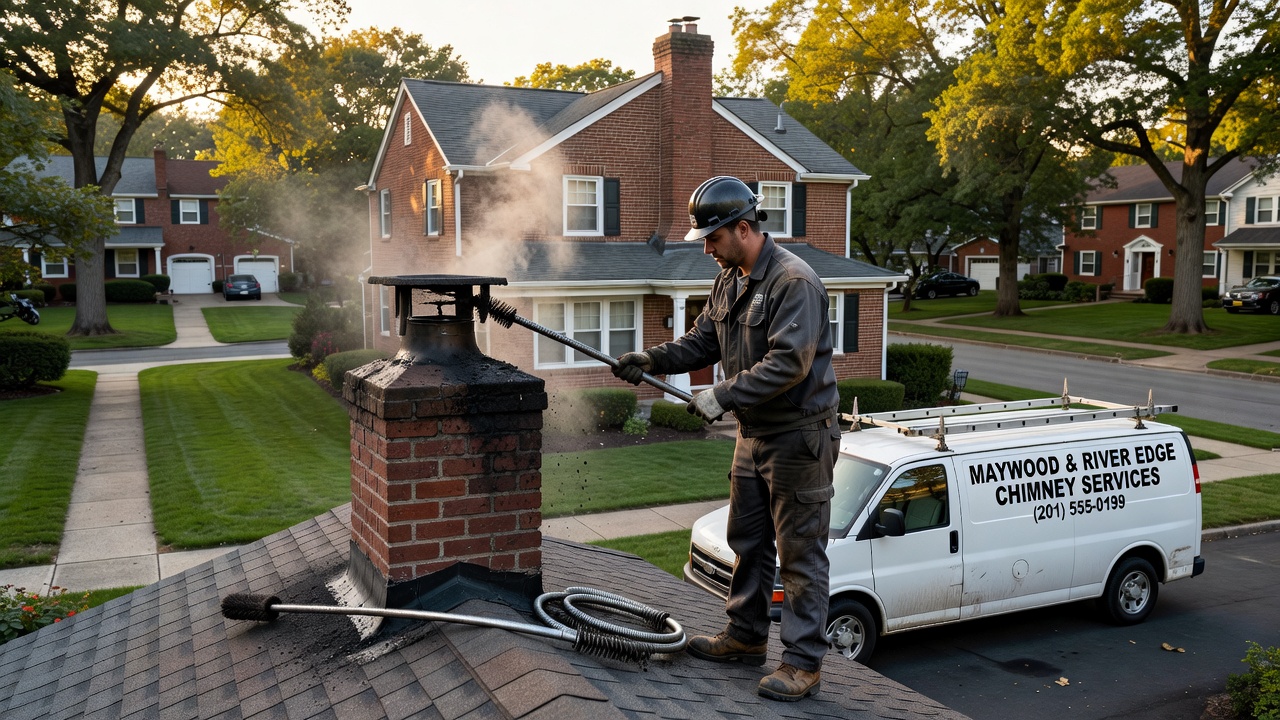
Chimney Sweep Maywood NJ: When to Call and What to Know
Most homeowners in Maywood and River Edge do not think about their chimney until something seems wrong. Smoke entering the living room, an unusual odor, visible buildup, or masonry damage can all be signs that the chimney needs attention. By the time a problem becomes noticeable, deposits or deterioration may have been developing for some time. Understanding what a chimney sweep looks for can help homeowners recognize problems earlier and determine when professional cleaning or inspection is appropriate.
What Goes Wrong and How a Professional Finds It
Creosote Buildup
Every wood-burning fireplace produces combustion byproducts that can accumulate inside the chimney. Creosote is one of the deposits that can form when smoke condenses on chimney surfaces.
Creosote does not need to be described as formal “Stage 1, Stage 2, and Stage 3” classifications. In practice, deposits can range from loose soot and flaky material to sticky, hardened, or glazed deposits that are more difficult to remove.
A professional evaluates the amount and condition of the buildup before determining the appropriate cleaning method. Ordinary deposits may be addressed through mechanical sweeping, while hardened or glazed deposits can require additional mechanical equipment or products designed for difficult creosote.
CSIA recommends cleaning a masonry fireplace when sooty buildup reaches approximately 1/8 inch, or sooner when glaze is present. The appropriate cleaning frequency depends on how the chimney is used and how quickly deposits accumulate.
Prevention: Burn dry, seasoned firewood and avoid prolonged smoldering fires. EPA guidance recommends firewood with a moisture content of 20 percent or less.
Cracked or Deteriorated Flue Liners
A chimney inspection can sometimes reveal cracked clay tiles, damaged mortar joints, or other deterioration inside the flue.
A chimney fire can expose a liner to extremely high temperatures and damage the chimney system. Other events or changes involving the chimney can also justify a more extensive inspection.
A Level 2 inspection is not automatically required after every routine cleaning. It is appropriate in circumstances specified by the applicable inspection standard, such as certain chimney fires, changes in the appliance or chimney, property transfer, or suspected problems that cannot be adequately evaluated during a Level 1 inspection. A Level 2 inspection includes video scanning of the accessible flue passages.
If liner damage is found, the appropriate repair depends on the type and extent of the damage. Options can include localized repair, replacement of damaged components, or relining when appropriate.
Prevention: Regular inspections can help identify deterioration before it develops into a larger chimney problem.
Deteriorated Mortar Joints and Spalling Brick
Masonry chimneys are exposed to weather, moisture, temperature changes, and normal aging. Mortar joints can deteriorate over time, while bricks can crack, flake, or spall.
A professional may identify exterior masonry problems from the ground and then examine the chimney more closely from an accessible location. The repair may involve repointing deteriorated joints, replacing damaged bricks, or addressing the source of moisture.
There is no universal mortar depth that automatically means a chimney needs repointing. The appropriate repair depends on the condition of the existing joints and masonry.
Mortar used for a repair should also be compatible with the existing masonry. Using an unnecessarily hard mortar can create additional problems in some masonry systems.
Prevention: Keep the chimney’s masonry, crown, flashing, and other water-shedding components in good condition. Address visible deterioration before moisture can contribute to more extensive damage.
Damaged or Missing Chimney Cap
A chimney cap helps keep precipitation, debris, and animals from entering the chimney. Some cap designs also provide additional protection against wind-driven rain or sparks.
A missing or damaged cap can allow water and debris into the chimney. Homeowners may notice water-related staining, nesting material, debris, or other evidence that something has entered the flue.
The appropriate replacement depends on the chimney configuration, flue, crown, and ventilation requirements. A professional should verify measurements before ordering a replacement.
Prevention: Inspect the cap periodically and address corrosion, damage, loose components, or other visible problems.
Firebox and Refractory Component Damage
The firebox is exposed to direct heat, so its masonry, mortar, and refractory components can deteriorate over time.
Some hairline cracks can occur in refractory materials without automatically meaning that the entire firebox requires replacement. More significant deterioration should be evaluated to determine whether a panel, mortar joint, or other component needs repair.
There is no universal 1/4-inch crack measurement that should be presented as an automatic replacement threshold for every fireplace. The type of material, location, extent of the crack, and manufacturer’s requirements all matter.
Prevention: Operate the fireplace according to the manufacturer’s instructions and avoid fires that exceed the appliance’s design or recommended operating conditions.
Draft Problems and Negative Pressure
Smoke entering the room can have several possible causes. The chimney, fireplace opening, combustion air, dampers, house pressure, exhaust fans, and other factors can all affect fireplace performance.
Home improvements can sometimes change the way air moves through a house. New windows, air sealing, insulation work, or mechanical ventilation can affect pressure conditions.
A professional evaluating a draft problem may examine the appliance, chimney configuration, damper, combustion-air conditions, and other relevant factors. Depending on the situation, additional diagnostic testing may be appropriate.
The solution depends on the actual cause. It could involve correcting a chimney or appliance issue, addressing combustion-air conditions, modifying a component, or correcting another source of poor draft.
Why Timing Matters
There is a practical reason to schedule chimney maintenance before the busiest part of the heating season. If an inspection identifies a problem, homeowners may need additional time to obtain an estimate, schedule repair work, or complete a more extensive project before using the fireplace.
However, there is no reliable basis for saying that Labor Day through mid-October is universally the cheapest or most available period in Maywood or River Edge. Scheduling and pricing vary by company, season, workload, and the scope of the service.
The same applies to claims that November appointments automatically cost more or that every chimney company will have a specific three-to-four-week backlog.
The better approach is simple: if you plan to use a wood-burning fireplace, do not wait until the first cold weekend to discover that it needs cleaning or repair.
What About Gas Fireplaces?
Gas appliances have different maintenance requirements from wood-burning fireplaces.
A gas fireplace does not produce the same creosote buildup associated with burning wood, but the appliance and venting system still require appropriate inspection and maintenance according to the manufacturer’s instructions and applicable requirements.
Homeowners should not assume that the inspection process for a gas appliance is identical to that for a wood-burning fireplace. The type of appliance, venting system, installation, and manufacturer’s instructions should determine the appropriate service.
If a gas appliance produces unusual odors, soot, changes in flame appearance, or other concerning symptoms, stop using it as appropriate and have it evaluated by a qualified professional.
What Should You Ask a Chimney Sweep in Maywood or River Edge?
Before scheduling service, ask the contractor what is included.
Useful questions include:
-
Is this a cleaning, an inspection, or both?
-
What inspection level is appropriate for my chimney?
-
What areas of the chimney will be evaluated?
-
What type of buildup was found?
-
Does the chimney have visible masonry or liner damage?
-
Will additional inspection be necessary?
-
What repairs are recommended?
-
What materials will be used?
-
Will I receive a written description of the work?
You can also ask about professional credentials and experience. CSIA certification is one credential homeowners may consider when evaluating chimney professionals.
Most importantly, do not choose a contractor solely because the initial price is the lowest. A useful estimate should explain what the contractor found and what work is actually included.
When to Call a Chimney Sweep in Maywood or River Edge
You do not have to wait until smoke enters the living room before having your chimney evaluated.
Consider scheduling an inspection or cleaning if you notice significant creosote buildup, smoke problems, unusual odors, visible masonry deterioration, damaged flashing, a missing chimney cap, or other changes in fireplace performance.
For wood-burning fireplaces, cleaning should be based on the amount and condition of deposits rather than an arbitrary calendar date. CSIA recommends regular inspection and cleaning when conditions warrant it.
For homeowners in Maywood, River Edge, and surrounding Bergen County communities, an early evaluation can also give you time to address problems before you need the fireplace regularly. If an inspection reveals a damaged liner, deteriorated masonry, draft problem, or other issue, the appropriate repair can then be planned based on the actual condition of the chimney.
Related from Chimney Hackensack NJ: Chimney Sweep in Hackensack — Protecting Bergen County Homes From the · Chimney Cleaning in Hackensack, NJ