
Published October 27, 2026
Warning Signs Your Hackensack Fireplace Needs Cleaning Now
A fireplace that has not been inspected recently may have creosote buildup, a blocked flue, or damaged components that affect safe operation. These problems can increase the risk of a chimney fire or allow combustion gases to enter your home. The Chimney Safety Institute of America (CSIA) follows the recommendation that chimneys, fireplaces, and vents be inspected at least once a year, with cleaning and repairs completed when necessary. For homeowners in Hackensack, NJ, recognizing warning signs can help determine when to schedule service and when to stop using the fireplace until a professional evaluates it. Here are eight signs to watch for.
1. Smoke Enters the Room When the Damper Is Open
Smoke should travel up the chimney and vent outdoors. If it spills into your living space, the flue may be blocked by creosote, an animal nest, debris, or damaged chimney components. Draft problems can also contribute to smoke entering the room.
What to do: Stop using the fireplace and arrange a prompt professional inspection before lighting another fire. If a carbon monoxide alarm sounds or you suspect carbon monoxide exposure, get everyone outside and call 911 from a safe location. Carbon monoxide is colorless and odorless, so you cannot rely on smell to detect it.
2. An Unusual Odor Comes from the Fireplace
A smoky, tar-like, or campfire odor coming from an unused fireplace can be associated with creosote deposits. The smell may become more noticeable during humid weather or when air moves down the chimney into the house.
However, odor alone cannot establish how much creosote is present or whether the flue is safe to use. Other draft or moisture-related conditions may also contribute to unpleasant smells.
What to do: Schedule an inspection if the odor persists or returns. A professional can assess the chimney, determine whether cleaning is needed, and investigate possible airflow problems. The CSIA notes that professional sweeping can reduce chimney odors, although it may not resolve every cause.
3. Black or Oily Residue Appears Around the Firebox
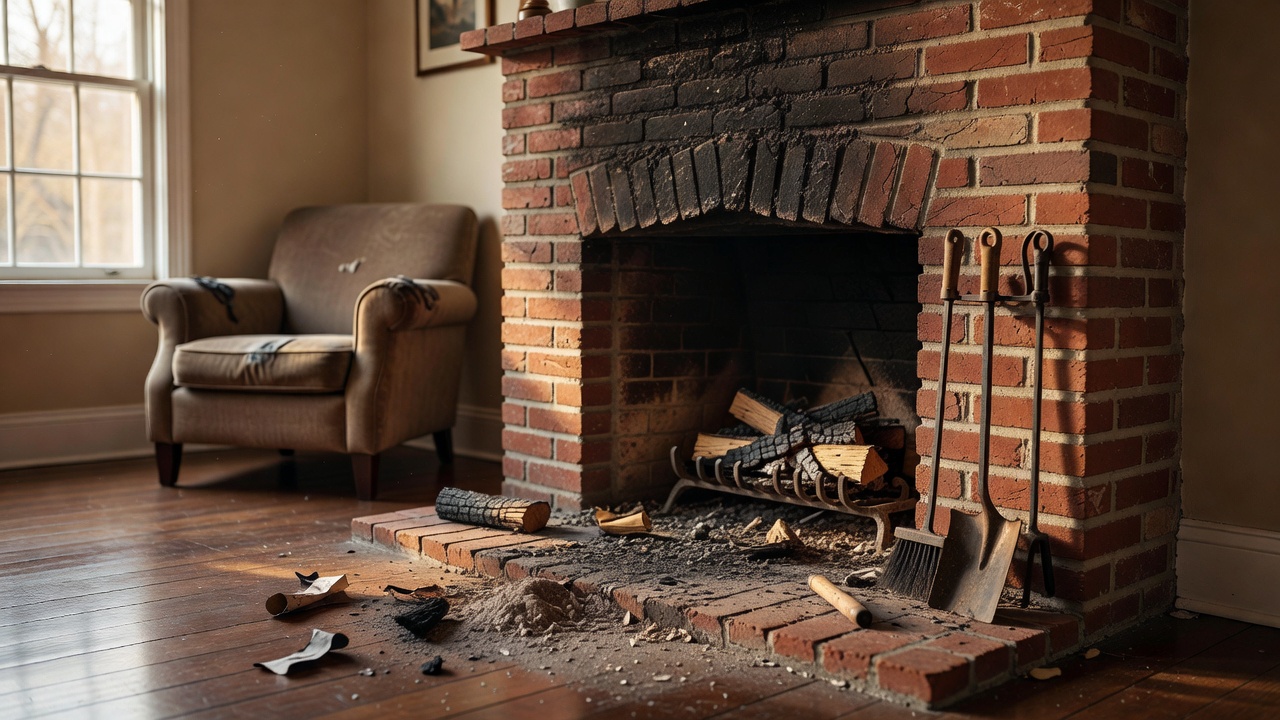
Dark deposits around the fireplace opening, on the damper, or inside the firebox may be soot or other combustion residue. Thick, shiny, or tar-like material deserves particular attention because it may indicate difficult-to-remove creosote.
Visible residue around the opening does not necessarily reveal how much buildup exists farther up the flue. An inspection is needed to evaluate the chimney’s interior condition.
What to do: Arrange professional service before using the fireplace if you see substantial or tar-like deposits. Ask the technician to explain the findings and whether cleaning alone is appropriate or additional evaluation is needed.
4. You Hear Unusual Rumbling or Roaring Sounds
Ordinary crackling from burning wood is expected. A sudden loud roar or unusual rumbling coming from the chimney may indicate an active chimney fire, especially if accompanied by excessive heat, sparks, or smoke.
A chimney fire does not always produce visible flames above the roof. It can damage the liner and other chimney components even when the damage is not immediately apparent from inside the home. The CSIA lists damaged flue tiles, distorted chimney caps, and creosote debris among possible signs that a chimney fire has occurred.
What to do: If you suspect an active chimney fire, get everyone out of the home and call 911. Do not attempt to investigate or extinguish the fire yourself. Do not use the fireplace again until it has been professionally evaluated and cleared for use.
5. White Staining Appears on the Exterior Brick
White, chalky deposits on masonry are often called efflorescence. They form when moisture moves through masonry and leaves soluble salts on the surface as the water evaporates.
On a chimney in Hackensack, this may indicate moisture movement, but it does not prove that there is an active leak or identify its source. Possible causes include water entering through damaged mortar, a deteriorated crown, or faulty flashing.
What to do: Arrange an inspection if the staining persists, returns after cleaning, or appears alongside crumbling mortar, loose bricks, or interior water damage. The contractor can assess whether moisture intrusion is contributing to deterioration and recommend appropriate repairs.
6. Cracks or Gaps Appear in the Firebox
The firebox contains the fire and directs combustion gases toward the flue. Cracks in its refractory panels or mortar joints can develop with use, but their significance depends on their location, extent, and condition.
Wider gaps, displaced panels, loose masonry, or visible separation between components deserve particular attention. A homeowner cannot reliably determine from appearance alone whether a crack is cosmetic or compromises the fireplace’s safety.
What to do: Stop using the fireplace if components are loose, displaced, or visibly deteriorating in a way that could affect safe operation. Arrange a professional inspection to determine whether repairs are necessary before use resumes.
7. The Damper Is Difficult to Operate
The damper helps control airflow through the fireplace. Depending on the design, it closes the flue when the fireplace is not in use and opens to allow smoke to vent during operation.
Rust, warping, debris, or damaged hardware can prevent a damper from moving properly or sealing as intended. A poorly sealing damper may also allow unwanted drafts into the home.
What to do: Have a sticking, damaged, or poorly sealing damper inspected. Before lighting a fire, make sure the damper is fully open and operating as intended. If it cannot open properly, do not use the fireplace until the problem is addressed.
8. Debris Falls into the Firebox
Small pieces of masonry, clay tile, mortar, or dark flaky material falling into the firebox may indicate deterioration somewhere inside the chimney. Damage can result from age, moisture, normal wear, or a previous chimney fire.
The material’s appearance alone cannot confirm the source. A damaged liner or other deteriorating component may require repair, but the appropriate solution depends on what the inspection reveals.
What to do: Stop using the fireplace if you suspect liner damage or significant deterioration. Arrange a professional inspection before using it again. The CSIA advises homeowners to seek professional evaluation after a suspected chimney fire because the appropriate repair may range from replacing individual flue tiles to installing a new liner or rebuilding part of the chimney.
What If You Cannot Remember the Last Chimney Cleaning?
If you regularly burn wood and cannot remember the last time your chimney was inspected, schedule an appointment before continuing to use the fireplace. The CSIA recommends annual inspections, but cleaning frequency depends on how much the fireplace is used, the type of fuel, and the deposits found.
A chimney can also develop obstructions or deterioration while it is not being used. That is why an annual inspection matters even for homeowners who burn infrequently.
What to do: Ask for an inspection that identifies the appropriate scope of work. If cleaning is recommended, request an explanation of the deposits found and whether any additional maintenance is needed.
Schedule a Fireplace Inspection in Hackensack, NJ
If you have noticed smoke entering the room, unusual deposits, falling debris, or possible damage, do not ignore the warning signs. Some conditions require an immediate emergency response, while others call for a prompt professional assessment before the next fire.
Homeowners in Hackensack, Teaneck, Maywood, and nearby Bergen County communities can look for a qualified chimney professional with relevant credentials, insurance, and experience. Ask what the inspection includes, whether cleaning is separate, and whether you will receive a written report of the findings.
You can review the information at chimneyhackensack.com, but confirm the company’s current service area, credentials, and any advertised free inspection offer before booking.
An annual inspection and timely cleaning when needed can help identify buildup, obstructions, and deterioration before they become more serious problems.
Related from Chimney Hackensack NJ: Fireplace Cleaning in Hackensack, NJ — Know What You’re Breathing Befo · Chimney Sweep in Hackensack — Protecting Bergen County Homes From the · Chimney Cleaning in Hackensack, NJ