
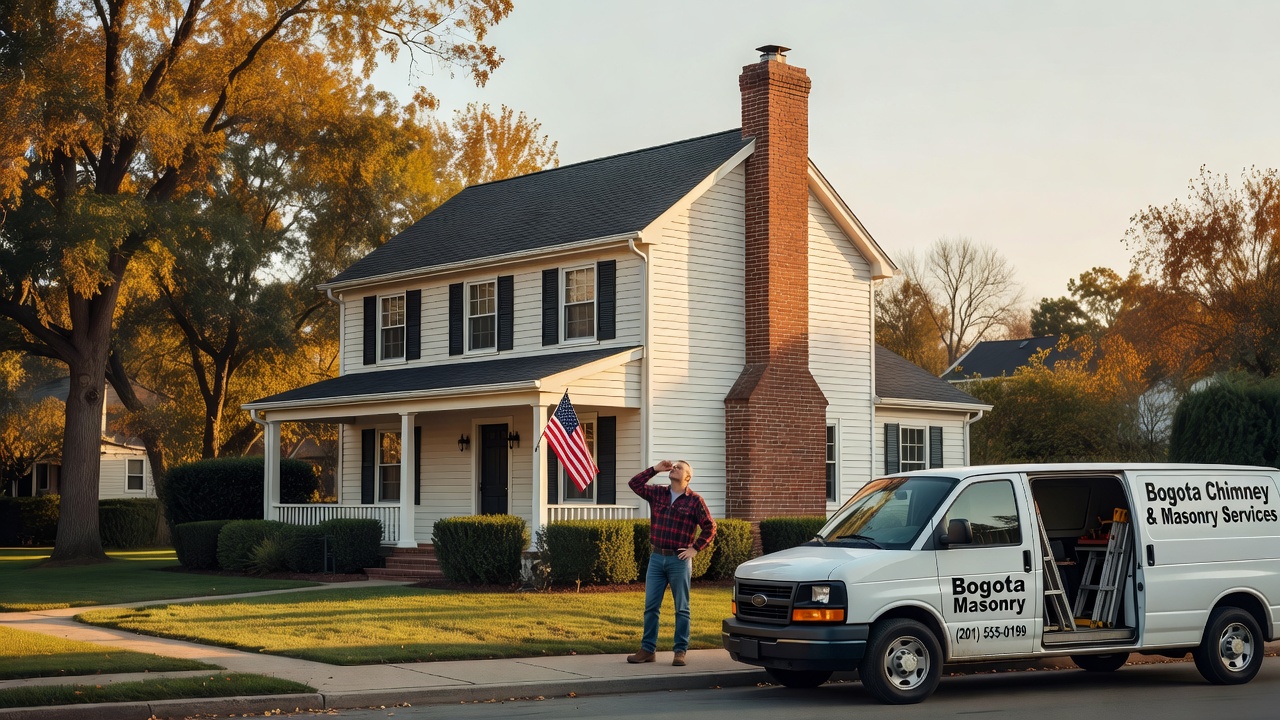
When to Schedule a Chimney Inspection in Hackensack NJ — A Timing Guide for Bogota Homeowners
Most people think about their chimney twice a year: when they light the first fire of the season and when they smell something wrong. Neither moment is a good time to find out you needed an inspection six months ago.
Bogota sits in the middle of Bergen County, and its homes reflect that. Many were built during the postwar decades, which means their fireplaces were designed around building codes that have been updated several times since. Some have original clay liner tiles that have never been inspected. Others have had gas inserts added at some point, which can change the inspection requirements.
If your home is on the older end, the CSIA recommends a Level 2 inspection whenever the appliance or venting system changes, not just on a once-a-year schedule. NFPA 211 states that chimneys, fireplaces, and venting systems should be inspected at least once per year. What the standard doesn’t tell you is that the time of year can also affect scheduling and your ability to address problems before heating season.
Why the Timing of a Chimney Inspection Actually Matters Here
Bergen County gets real winters. Bogota typically sees temperatures drop into the teens in January, and residents often use their fireplaces from late October through March. That sustained use is exactly when the system is under stress, and it’s also the worst time to discover a cracked flue liner or damaged damper.
The other factor is contractor availability. Chimney service companies in this area can become heavily booked once September arrives. Scheduling during peak season isn’t just inconvenient. It can leave you waiting weeks for an inspection or repair when you’re ready to use your fireplace.
Spring: The Best Window Most Bogota Homeowners Miss
April and May are excellent months to schedule a chimney inspection in Hackensack and the surrounding towns. The heating season has just ended, any damage from winter use is still fresh, and contractors generally have more scheduling flexibility.
There’s also a practical reason to inspect and clean in spring: creosote. When wood burns, it leaves behind a combustible residue on the flue walls. Over time, that residue can become more difficult to remove. Inspecting and cleaning in spring gives you plenty of time to address buildup before the next heating season.
Spring inspections can also identify freeze-thaw damage. Temperatures in Bogota can repeatedly move around the freezing point during winter, and those cycles can contribute to cracked mortar joints, damaged crown material, and spalling brickwork.
A spring inspection documents the condition of the chimney after winter and gives you time to address repairs before the weather turns cold again.
The cost of a standard Level 1 inspection in this part of Bergen County typically runs between $125 and $200. If the inspection reveals the need for camera scoping, which is part of a Level 2 inspection, expect approximately $250 to $400 depending on the system’s complexity.
Summer: A Useful Backup Window, With One Caveat
June through August is another good time to book. Contractors are generally less backlogged, and any repair work identified during the inspection can be completed before fall demand picks up.
Masonry work can also benefit from warm, dry weather because mortar and other repair materials need appropriate conditions to cure properly.
The caveat is moisture. Bogota summers are humid, and an uncapped chimney or one with a damaged crown can take on water during summer storms. If you’re scheduling a summer inspection, make sure your technician checks the chimney cap and crown.
A missing or damaged cap can allow water, animals, and debris into the chimney. Addressing the problem before fall can help prevent more extensive damage.
Fall: High Demand, Compressed Timeline
September and October are when most Bogota homeowners think to call, which is also why this can be the hardest window to schedule.
By mid-October, some chimney companies serving Hackensack and nearby communities such as Teaneck, Maywood, and River Edge may already be booking several weeks out. If you haven’t booked by early September, you may have less flexibility.
An inspection pushed into November might not leave enough time to complete necessary repairs before you want to use the fireplace in December. Some repairs, such as tuckpointing or crown rebuilding, can also become more difficult when temperatures are too cold for proper curing.
That said, a fall inspection is far better than no inspection. If you’re already in this window, call now rather than waiting until you’re ready to light the first fire.
Winter: Inspect Only If There’s a Problem
December through February is not the ideal time for routine inspections in most cases. Systems are actively being used, and scheduling non-emergency work can be more difficult.
More importantly, if an inspection reveals a significant problem in the middle of the heating season, you may be left without a working fireplace during the coldest part of the year.
The exception is when you notice something wrong. Smoke entering the living space, a persistent smoke smell, visible cracking in the firebox, or an unusual number of debris falling into the firebox are all reasons to call promptly, regardless of the season.
A technician can perform a diagnostic inspection during winter when necessary. Identifying a problem is always safer than continuing to use a potentially compromised system.
What happens if you wait too long? Creosote buildup can increase the risk of a chimney fire. In older Bergen County homes with clay tile liners, a chimney fire can damage or crack the liner, potentially allowing heat and sparks to reach surrounding combustible materials.
That’s a risk worth taking seriously in homes built during the 1950s and 1960s.
The Inspection Process: What to Expect From Start to Finish
A standard Level 1 inspection in Bogota covers the accessible portions of the chimney interior and exterior, the firebox, damper, smoke chamber, and visible flue. The technician checks for obstructions, signs of deterioration, and creosote buildup.
A typical inspection can take roughly 45 minutes to an hour, depending on the system and accessibility.
If the inspector identifies concerns that require camera work, a Level 2 inspection may be recommended. This involves running a video camera through the flue to document the condition of the liner.
You’ll receive still images or video footage along with a written report, depending on the company and inspection scope. That documentation can be useful when you’re buying or selling a home, filing an insurance claim, or planning liner work.
The technician should explain what was found, what needs to be addressed before the system can be safely used, and what can wait.
A good inspector won’t pressure you into unnecessary work. If the chimney is clean and structurally sound, they should tell you that.
Schedule Before the Rush
Bogota homeowners who book their chimney inspection in spring or early summer have more scheduling flexibility and plenty of time to complete any necessary repairs before heating season. That’s the straightforward case for not waiting until fall.
Chimney Hackensack serves Bogota and surrounding Bergen County communities. If your chimney hasn’t been inspected recently or you’re unsure when it was last evaluated, contact us today to schedule an inspection before the fall rush.
We’ll assess your chimney, explain what we find, and give you a clear picture of what needs attention before the heating season begins.
Related from Chimney Hackensack NJ: Chimney Cleaning in Hackensack, NJ · Chimney Repair in Hackensack, NJ · Chimney Sweep in Hackensack