
Fact-Checked
Source Material Verified
Creosote Removal in Bergen County: What You Can Handle and When to Call a Chimney Pro
Most chimney fires start quietly. There may be no obvious warning before creosote ignites inside the flue. In Bergen County, where older colonials and split-level homes with wood-burning fireplaces are common, creosote buildup is a major chimney maintenance concern. Knowing what you can safely handle yourself and when professional service is necessary can help prevent costly repairs and safety problems.
What Creosote Is and Why Bergen County Homes Are Prone to It
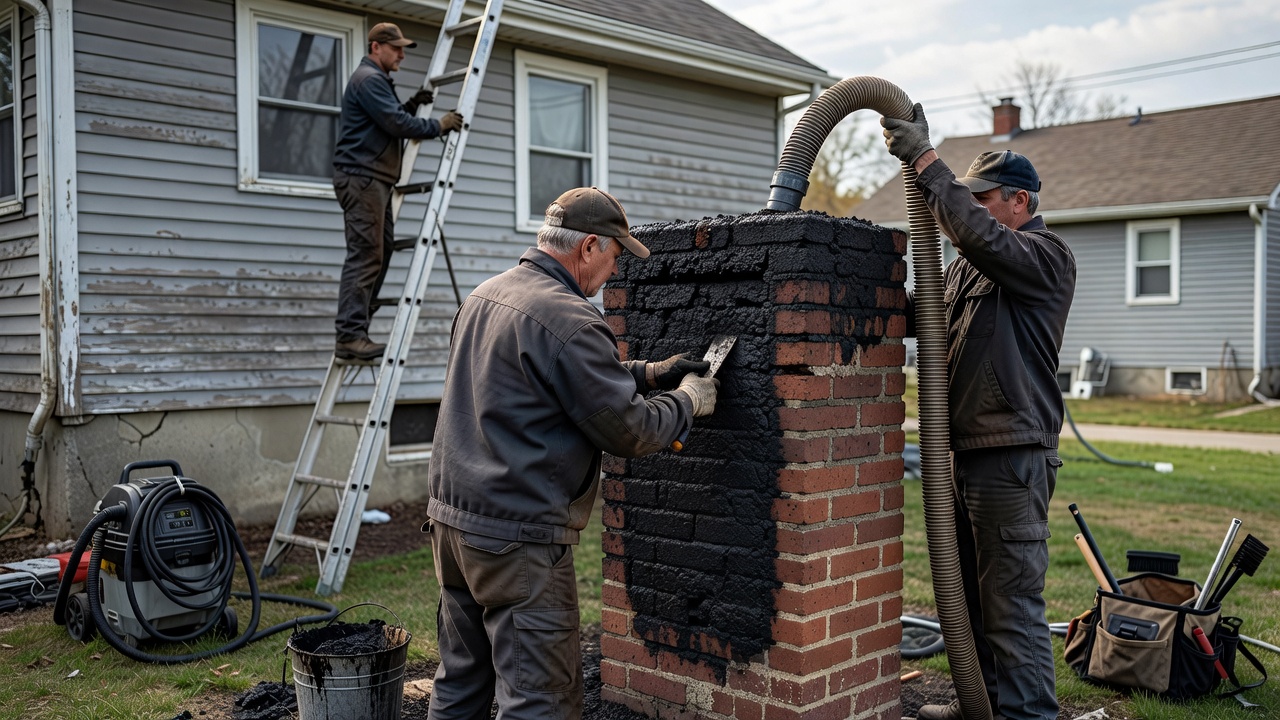
Creosote forms when wood smoke cools before it fully exits the chimney. The resulting residue collects along the flue liner and can range from loose, flaky deposits to hard, glazed buildup.
Stage 1 creosote is generally easier to remove. Stage 2 is harder and more difficult to brush away. Stage 3 is a dense, glazed deposit that may require specialized chemical treatment and mechanical cleaning.
Bergen County homeowners commonly use fireplaces from October through March. Older clay tile liners can also have surface irregularities that allow deposits to accumulate. Burning unseasoned wood or operating fires at low temperatures can contribute to heavier buildup.
Regular chimney inspection and cleaning are important for systems that are used regularly. A professional can determine the amount of creosote present and whether additional cleaning is necessary.
What a Homeowner Can Reasonably Handle
There are several maintenance tasks homeowners can safely manage.
Burning properly seasoned hardwood is one of the most effective ways to reduce creosote formation. Wood with moisture content below 20 percent produces less smoke than green or wet wood. A basic moisture meter can help verify the moisture level of firewood.
Chimney cleaning logs can also be used as a supplemental maintenance product. They are not a replacement for professional sweeping, but they can help with certain lighter deposits when used according to the product instructions.
Homeowners can also remove excess ash, check that the damper opens fully before starting a fire, and visually inspect the firebox for obvious cracks or damage.
What homeowners should avoid is climbing onto the roof with a generic brush kit and assuming the chimney has been properly cleaned.
Where DIY Creosote Removal Goes Wrong
Chimney brushes need to match the size and configuration of the flue. Using the wrong brush can leave sections of creosote behind. Improper cleaning can also spread fine creosote particles throughout the living space.
Heavier Stage 2 and Stage 3 deposits can require specialized equipment and treatment. Attempting to remove hardened deposits aggressively can also damage an older clay tile liner.
There is another important part of professional chimney service: inspection. A qualified chimney sweep does more than remove deposits. The technician can assess the liner, chimney cap, crown, flashing, firebox, and other accessible components.
Cleaning a chimney without identifying a cracked liner or deteriorating masonry can leave a potentially serious problem unresolved.
Choosing the Right Contractor in Bergen County
Homeowners in Teaneck, Maywood, Hackensack, and surrounding Bergen County communities should verify a contractor’s qualifications before scheduling service.
Ask whether the technician is CSIA certified and request the certification information so you can verify it. NFI certification can also be useful when the service involves gas appliances or other specialized hearth systems.
Ask for proof of liability insurance and workers’ compensation coverage. Get the estimate in writing and make sure it clearly explains what the quoted price includes.
A basic cleaning and Level 1 inspection for a straightforward fireplace in Bergen County typically runs $150 to $250. If significant creosote requires chemical treatment, costs can reach approximately $300 to $500. A Level 2 inspection with video scanning generally costs more.
Be cautious of contractors who provide a firm price without asking about the fireplace type, fuel, usage, or previous cleaning. Be equally cautious if a contractor immediately recommends expensive liner replacement without providing documentation of the damage.
Ask how the company handles Stage 3 creosote and how they protect the interior of your home during cleaning. A professional should be able to explain the process clearly.
When It Is Time to Call a Professional
If your fireplace has been used regularly during the past season and has not been professionally cleaned within the last year, scheduling an inspection before the next fire is a practical step.
Professional service can identify creosote buildup and other chimney problems before they become more expensive. It also gives you a clearer understanding of the actual condition of your system.
Chimney Hackensack serves homeowners throughout Bergen County with CSIA-certified and insured technicians. Contact the company to schedule a free chimney inspection and find out what your chimney actually needs before the next heating season.
Related reading
Anthony Russo, CSIA Certified Chimney Sweep
Master Sweep
Bergen County’s trusted chimney expert, serving Hackensack and surrounding areas for 10+ years.
Related from Chimney Hackensack NJ: Chimney Repair in Hackensack, NJ