
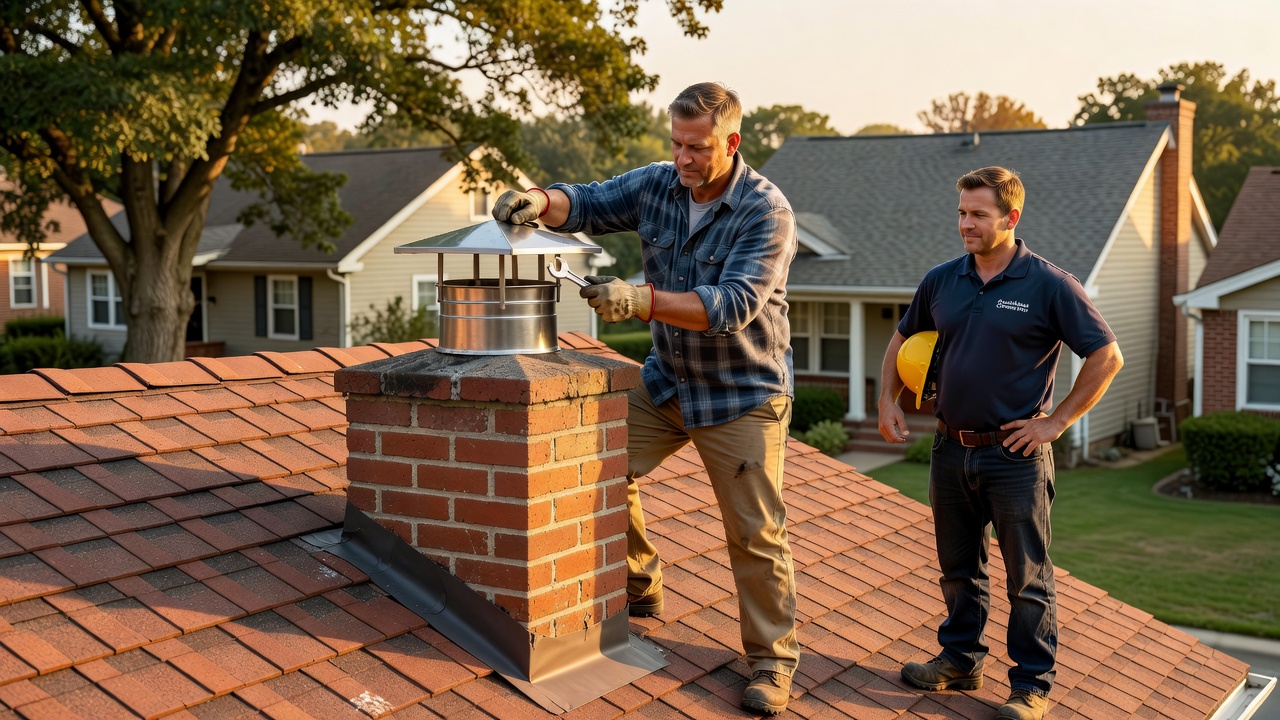
Chimney Cap Installation Hackensack NJ: DIY vs Professional
A chimney cap may look like a simple piece of metal, but it is part of a larger chimney system. The right cap can help keep rain, snow, animals, leaves, and other debris out of the chimney. It can also help reduce wind-driven downdrafts and, when properly designed, provide spark protection.
For homeowners in Hackensack, Teaneck, Maywood, and nearby Bergen County communities, the important question is not simply whether a cap can be installed. It is whether the chimney is suitable for the installation and whether the homeowner can safely access the chimney top.
What a Chimney Cap Actually Does
A chimney cap is installed at the top of a chimney or flue termination. Designs vary depending on whether the chimney is masonry, factory-built, or serving a particular heating appliance.
One important function is keeping precipitation out. CSIA explains that water entering an uncapped chimney can contribute to deterioration of masonry and mortar, especially when moisture remains inside the chimney and is exposed to freeze-thaw conditions.
Caps can also help keep birds, animals, leaves, and other debris from entering the chimney. Some designs include screening that also serves as a spark-arresting component. The correct design depends on the chimney and appliance rather than a universal cap size.
A cap is not a substitute for inspecting the chimney itself. An annual inspection is recommended for chimneys, fireplaces, and vents, with cleaning, maintenance, and repairs performed when necessary.
What Homeowners May Be Able to Handle
A straightforward replacement may be manageable for an experienced homeowner when the chimney is easily accessible, and the existing cap is a simple, properly sized model.
For example, replacing a damaged cap with an equivalent model can be relatively simple when the flue dimensions are known and the chimney top is in good condition. The homeowner still needs to verify that the replacement is appropriate for the chimney and appliance.
The bigger issue is roof access. A homeowner should not treat a chimney-cap project as a routine DIY job if reaching the chimney requires unsafe ladder positioning, steep-roof work, or other fall exposure.
Homeowners can also inspect a cap from the ground when possible. A visibly missing, tilted, damaged, or badly corroded cap is a reason to investigate further.
Cleaning loose debris from an accessible area may also be reasonable when it can be done safely. However, disturbing an animal nest or working directly around an active flue requires additional caution.
When a Professional Should Handle the Job
Some chimney-cap projects involve conditions that go beyond replacing a simple cover.
Multi-Flue Chimneys
A chimney serving multiple flues may require a larger custom cap or a different design than a single-flue chimney. Measurements, clearance, fastening, and access all become more important.
A professional can evaluate the entire chimney top before recommending a replacement rather than simply matching the old cap.
Damaged Crowns
The chimney crown is the area at the top of a masonry chimney that helps shed water around the flue. If the crown is cracked or deteriorated, installing a new cap does not correct that underlying problem.
CSIA’s homeowner guidance explains that water can contribute to deterioration inside masonry chimneys.
If the crown needs repair, that work should be addressed as part of the overall chimney evaluation.
Factory-Built Chimneys
Factory-built fireplace and chimney systems have their own listed components and installation requirements. A replacement part should be compatible with the system rather than selected solely by appearance or dimensions.
This is especially important when replacing a chase cover or termination component. The manufacturer’s installation instructions and listing should be checked before making changes.
Gas and Heating Appliance Vents
Not every vent serving a gas appliance uses the same termination component. Appliance type, venting system, manufacturer requirements, and applicable code all matter.
New Jersey currently uses the 2024 editions of its adopted construction subcodes, including the 2024 International Residential Code and 2024 International Fuel Gas Code.
For that reason, homeowners should not install a generic chimney cap on a gas appliance vent without first determining what termination the system requires.
Difficult Roof Access
Roof safety is another important consideration. A two-story home with a steep roof presents very different access conditions from a one-story home with a low-slope roof.
If safe access cannot be established, the cap installation should be handled by someone equipped for the work.
Common Chimney Cap Mistakes
Choosing the Wrong Size
A cap needs to fit the chimney configuration properly. Guessing based on the outside appearance of the chimney can result in an improperly fitted product.
Measurements should be taken from the actual chimney or flue termination. Custom configurations may require additional measurements.
Ignoring the Crown
A new cap will not repair a deteriorated crown. If water is entering through cracks or other defects, replacing the cap alone may leave the underlying problem unresolved.
The chimney top should therefore be evaluated before installation.
Assuming the Cheapest Cap Is Always the Best Choice
Cap materials and designs vary. Stainless steel, copper, galvanized steel, and other options may be available depending on the application.
Instead of choosing solely by price, homeowners should consider the chimney configuration, expected exposure, manufacturer specifications, and the installation method.
There is no single service life that applies to every chimney cap. Installation quality, material, environmental exposure, and maintenance all affect durability.
Treating the Cap as the Inspection
A new cap does not mean the entire chimney has been inspected.
CSIA recommends annual chimney inspections. Its Level 1 guidance describes Level 1 as the appropriate inspection level for routine cleanings and annual inspections when there has been no significant change to the system.
An inspection can identify conditions involving the flue, masonry, appliance connection, deposits, or obstructions that a new cap would not address.
What Professional Chimney Cap Installation Involves
A professional installation should begin by identifying the type of chimney and the component that needs to be installed.
The technician can then evaluate the chimney top, measure the relevant dimensions, and check the crown, masonry, existing termination, and other accessible components.
The replacement cap should be compatible with the chimney and appliance. The fastening method should also be appropriate for the cap and chimney construction.
If damage is found before installation, the homeowner should receive an explanation of the problem and why the recommended repair is necessary.
The final installation should leave the cap securely attached while maintaining the clearances and airflow required by the chimney system.
How Much Does Chimney Cap Installation Cost in Hackensack?
There is no reliable single price for chimney-cap installation in Hackensack or Bergen County.
A basic replacement may cost considerably less than a custom multi-flue cap, chase-cover replacement, or an installation that also requires crown or masonry repairs. Material, dimensions, roof access, chimney height, and the condition of the existing chimney can all affect the final price.
The best way to compare estimates is to ask for the cap material, dimensions, installation method, and any additional repairs to be listed separately.
Choosing a Chimney Professional in Hackensack
If you are unsure whether your chimney needs a new cap, start with an evaluation of the chimney top.
Ask the contractor to explain the condition of the crown, masonry, flue termination, and existing cap. If the chimney serves a gas or heating appliance, ask what termination component is appropriate for that specific system.
It is also reasonable to ask about relevant credentials, insurance, experience with your type of chimney, and whether the proposed work complies with applicable New Jersey requirements.
A chimney cap can be an important part of protecting a chimney from weather and unwanted debris. But the cap should be treated as one component of the system rather than a standalone fix.
Related from Chimney Hackensack NJ: Chimney Cleaning in Hackensack, NJ · Chimney Sweep Service in Hackensack, NJ