
How to Get Your Chimney Swept in River Edge, NJ Without Cutting Corners
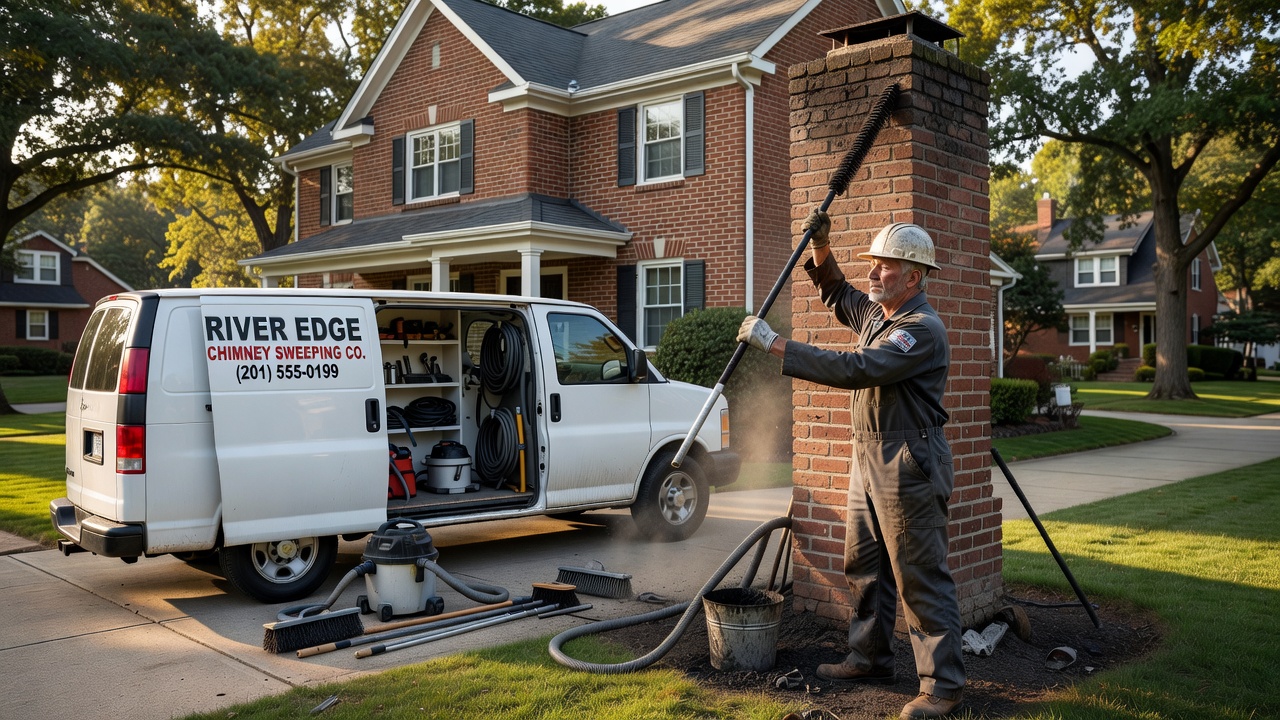
Creosote can build up quietly inside a chimney after repeated fires. Homeowners may not notice a problem until they see smoke entering the room, smell an unusual odor, or notice that the fireplace is not drafting properly. In River Edge, where many homes have older masonry chimneys, regular inspection and cleaning can help identify problems before they become more expensive. Here is what River Edge homeowners should know about scheduling a chimney sweep, preparing for the appointment, and choosing a qualified professional.
Before You Start
Start by looking at the chimney from the ground. Check whether the cap appears intact, whether the masonry has visible cracks, and whether any bricks look displaced or heavily stained. Take a few photos if possible so you have a record of the chimney’s condition.
Also consider the type of appliance you have. Wood burning fireplaces can accumulate creosote, while gas appliances have different venting and maintenance considerations. If you are unsure when the chimney was last inspected, that is useful information to give the technician when you schedule the appointment.
Step 1: Schedule at the Right Time of Year
Late summer and early fall can be convenient times for River Edge homeowners to schedule chimney service. Booking before the heating season gives you more time to address problems if the technician discovers damaged masonry, a chimney cap issue, or a problem with the flue liner.
Waiting until the first cold spell can make scheduling more difficult because many homeowners are trying to arrange service at the same time. If your chimney needs repairs, an early inspection also gives you more time to complete the work before you plan to use the fireplace.
Step 2: Verify the Company’s Credentials Before You Book
Ask whether the technician performing the work is CSIA certified. The Chimney Safety Institute of America provides certification for chimney professionals and offers resources for homeowners looking for qualified technicians.
An NFI certification can also be useful when the technician is working with hearth appliances and venting systems.
You should also ask whether the company carries appropriate insurance and whether it provides written documentation after the inspection. Check the company’s contact information and service history before making an appointment.
The goal is not simply to find someone who can clean a chimney. You want someone who can recognize conditions that may require additional inspection or repair.
Step 3: Understand What a Level 1 Inspection Covers
A routine chimney sweep and inspection may include a Level 1 inspection when there are no known changes or problems with the system.
The technician can inspect accessible portions of the chimney, including the firebox, damper, accessible flue area, smoke chamber, chimney cap, crown, and exterior masonry. The chimney is then cleaned using equipment appropriate for the system and the type of buildup present.
A Level 1 inspection does not involve opening walls or removing components to examine concealed areas.
If the technician finds evidence of a problem that cannot be evaluated through a basic visual inspection, a Level 2 inspection may be recommended. This can include video examination of the flue interior.
The important point is that cleaning and inspection serve different purposes. Cleaning removes accumulated material. Inspection evaluates the condition of the chimney system.
Step 4: Prepare Your Home for the Appointment
Clear the area around the fireplace before the technician arrives. Move rugs away from the hearth and remove fragile items from the mantel or nearby surfaces.
Professional chimney sweeps typically use drop cloths and specialized vacuums to control soot and debris, but preparing the area still makes the appointment easier.
Keep pets away from the work area while the technician is working. If roof access is necessary, make sure the technician knows about any access limitations, steep roof sections, or other conditions that could affect the appointment.
Step 5: Be Present and Ask Questions
If possible, be available during the inspection. When the technician identifies an issue, ask them to explain what they found and whether it affects the safe operation of the fireplace.
If a camera inspection is recommended, ask what prompted it. If repairs are suggested, ask for photographs or other documentation showing the condition that needs attention.
A professional should be able to explain the finding in straightforward language rather than simply telling you that something is “bad.”
Ask for a written inspection report as well. Documentation gives you a record of the chimney’s condition and the recommendations made during the appointment.
Step 6: Get a Written Quote Before Agreeing to Repairs
A standard chimney sweep and Level 1 inspection in the River Edge and Hackensack area may cost around $150 to $300, depending on the chimney and the scope of service.
If repairs are recommended, ask for a written and itemized estimate before authorizing the work. The estimate should explain what needs to be repaired, what materials will be used, and what the quoted price covers.
Be cautious if a technician pressures you to approve expensive repairs immediately without showing you evidence of the problem. For significant repair work, getting a second opinion can be a reasonable step.
Step 7: Keep Up With Future Inspections
Once your chimney has been cleaned and inspected, keep a record of the service date and any recommendations.
Regular use can lead to additional buildup, while weather, moisture, animals, and normal deterioration can affect the chimney even when the fireplace is used infrequently. Keeping up with inspections helps you identify these issues before they become larger problems.
Troubleshooting Tip: If Smoke Is Backing Into the Room
Smoke entering the living space can have several causes, including a blocked flue, a damper that is not fully open, poor draft, or pressure conditions inside the home.
Do not continue using the fireplace if smoke repeatedly enters the room. Make sure the damper is fully open and have the chimney evaluated if the problem continues.
If you suspect a carbon monoxide problem, leave the home and contact emergency services as appropriate. Carbon monoxide is odorless and cannot be reliably identified by smell.
River Edge Homeowners: Schedule Before the Rush
Getting your chimney inspected before the heating season gives you time to address problems without waiting until you are ready to light your first fire.
Chimney Hackensack serves River Edge, Hackensack, Teaneck, Maywood, and surrounding Bergen County communities. Our technicians can inspect your chimney, explain what they find, and help you understand whether cleaning or additional work is needed.
Contact chimneyhackensack.com to schedule your inspection before the busy season begins.
Related from Chimney Hackensack NJ: Chimney Sweep Hackensack · Chimney Cleaning in Hackensack, NJ