
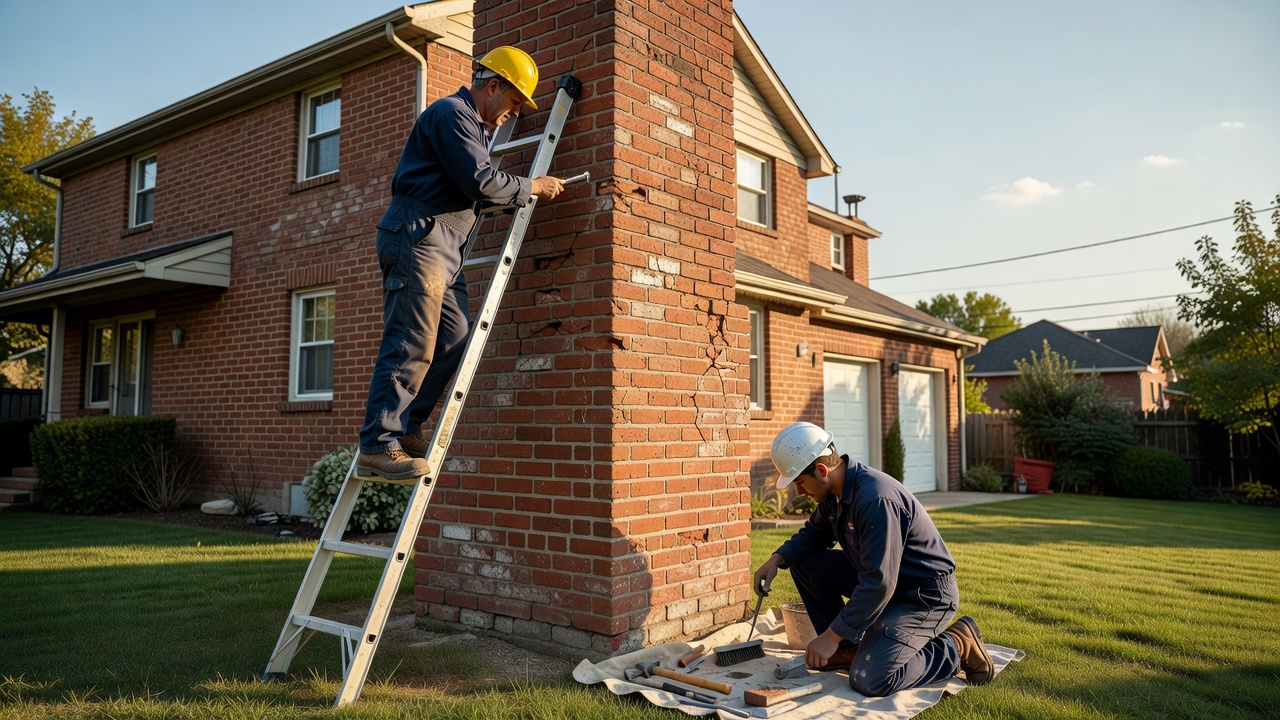
Masonry Chimney Repair Hackensack NJ: What Is Wrong and How Professionals Fix It
Masonry chimney problems are not always obvious from the ground. You may notice water staining near a fireplace, loose mortar, damaged bricks, or debris around the chimney before you know exactly what caused the problem.
Those signs can have several possible causes. Water can enter through deteriorated masonry, a damaged crown, flashing problems, or other parts of the chimney system. A qualified chimney professional needs to identify the source before recommending a repair.
For homeowners in Hackensack, Teaneck, Maywood, and nearby Bergen County communities, understanding the most common masonry chimney problems can make it easier to evaluate a repair recommendation.
Deteriorating Mortar Joints
What you may notice: Crumbling, missing, or recessed mortar between bricks. Loose masonry material may also appear around the chimney or on the roof.
What’s happening: Mortar joints can deteriorate from weather exposure, water intrusion, age, and other conditions. Once masonry begins to deteriorate, water can enter areas that were previously protected.
The exact cause and extent of deterioration should be determined during an inspection rather than assumed from the appearance of the joint.
The professional fix: A mason may recommend repointing or tuckpointing where mortar has deteriorated but the surrounding brick remains suitable for repair. The damaged mortar is removed to an appropriate depth, the joint is cleaned, and compatible new mortar is installed.
Mortar compatibility is important, particularly when repairing older masonry. A repair mortar should be selected based on the existing masonry and project conditions rather than simply choosing the hardest available mix.
Can it be prevented? Regular inspections can help identify deteriorating masonry before more extensive damage develops. CSIA recommends annual chimney inspections to evaluate soundness, deposits, and clearances, with cleaning, maintenance, and repairs performed when necessary.
Spalling Brick
What you may notice: Brick faces may flake, chip, crack, or break away. You may also find fragments around the chimney.
What’s happening: Moisture can contribute to masonry deterioration, particularly when water enters porous materials and repeated freezing and thawing occurs. However, not every case of spalling has exactly the same cause.
A professional should determine where the moisture is coming from and whether other components are contributing to the problem.
The professional fix: Individual damaged bricks may sometimes be removed and replaced with compatible masonry units. More extensive deterioration may require a larger section of masonry to be rebuilt.
The water source should also be investigated. A damaged crown, flashing problem, open mortar joint, or other defect may be contributing to the moisture intrusion.
Repairing the visible brick without addressing the underlying source of moisture may allow the problem to return.
Can it be prevented? Keeping water out of the masonry system is an important part of maintenance. Depending on the chimney and masonry, a qualified professional may recommend an appropriate breathable water-repellent treatment. The product should be compatible with the masonry and should not prevent the assembly from drying.
Cracked or Deteriorated Chimney Crown
What you may notice: Cracks at the top of the chimney, visible deterioration, water entering the chimney, or masonry damage near the chimney’s upper section.
What’s happening: The crown, sometimes called the wash, helps protect the top of a masonry chimney from precipitation. If the crown cracks or deteriorates, water can reach the masonry below.
The cause of crown deterioration can vary. Construction details, weather exposure, movement, materials, and maintenance history can all play a role.
The professional fix: Minor deterioration may be repairable with a suitable chimney-crown repair material. If the crown is extensively damaged, rebuilding may be more appropriate.
A professional should evaluate the crown’s condition, its relationship to the flue liner, and how water is being directed away from the chimney.
CSIA guidance identifies the crown and flashing as components that should be examined during a more extensive chimney inspection.
The exact dimensions and construction details of a replacement crown should follow the applicable code, design, manufacturer requirements where applicable, and the characteristics of the existing chimney rather than relying on one universal thickness or slope.
Failed or Deteriorated Flashing
What you may notice: Water stains on ceilings or walls near the chimney, damp areas after rain, or visible deterioration around the chimney-roof intersection.
What’s happening: Flashing helps prevent water from entering where the chimney passes through the roof. The system can include base flashing, step flashing, and counter flashing depending on the roof and chimney configuration.
A flashing problem is not always simply a matter of applying more sealant. The actual condition of the flashing and surrounding roofing materials needs to be evaluated.
The professional fix: Depending on the condition, repair may involve replacing or modifying flashing components, correcting the counter-flashing connection, addressing roofing materials, or repairing damaged surrounding areas.
If water has already reached the roof structure, additional repairs may be necessary.
A professional should determine whether the leak originates at the chimney-roof intersection or from another part of the chimney system before recommending a repair.
Damaged or Deteriorated Flue Liner
What you may notice: Smoke entering the home, unusual combustion odors, visible damage inside the chimney, or evidence of a previous chimney fire.
What’s happening: A chimney liner is part of the venting system. Damage to the liner can affect the chimney’s ability to contain and safely vent combustion products.
EPA warns that blocked, leaking, or damaged chimneys and flues can release harmful combustion gases and particles, including potentially dangerous concentrations of carbon monoxide.
Clay tile liners can crack or deteriorate. Chimney fires can also damage flue tiles and mortar joints. CSIA specifically recommends an internal video inspection after a suspected chimney fire to evaluate flue tiles and mortar joints.
The professional fix: The appropriate repair depends on the type and extent of damage.
Possible solutions can include replacing accessible damaged components, installing an appropriate stainless-steel liner system, or using another lining method that is compatible with the appliance and chimney.
A relining project should not be specified solely from the chimney’s age. The professional needs to evaluate the existing flue, appliance, dimensions, and applicable installation requirements.
Can it be prevented? Regular professional inspection can identify deterioration before it becomes a larger problem. However, a video inspection is not automatically required at a fixed interval for every chimney. It becomes particularly useful when the inspection circumstances call for examination of areas that cannot otherwise be adequately evaluated.
How Professionals Diagnose the Problem
A good chimney repair begins with diagnosis rather than a predetermined repair.
Depending on the circumstances, the inspection may involve:
- Examining exterior masonry
- Checking mortar joints
- Looking at the crown and chimney termination
- Evaluating visible flashing
- Inspecting accessible interior components
- Checking for signs of water intrusion
- Looking for visible flue damage
- Using video equipment when a more detailed internal examination is appropriate
CSIA Level 2 guidance includes inspection of accessible attic areas, the chimney crown, flashing, liner dimensions, and other components that may not be evaluated during a basic inspection.
If a chimney fire is suspected, CSIA specifically recommends internal video inspection after the chimney has been swept.
What Determines Chimney Repair Cost?
There is no reliable single price for masonry chimney repair in Hackensack or the surrounding Bergen County area.
The final cost can depend on:
- The type of damage
- How extensive the damaged area is
- Chimney height
- Roof access
- Masonry materials
- Whether bricks need replacement
- Whether the crown needs repair or rebuilding
- Flashing condition
- Liner condition
- Whether scaffolding or specialized access equipment is necessary
- Whether additional roof or structural repairs are discovered
A small area of repointing is very different from rebuilding a large section of chimney or installing a new liner.
For that reason, homeowners should be cautious about accepting a precise repair price before the chimney has been evaluated.
Ask for a written description of the problem, the proposed repair, the materials being used, and any work that is excluded from the estimate.
When Should You Get a Second Opinion?
A second opinion can be useful when a recommended repair is extensive or expensive.
Ask the contractor to document the condition that requires repair. Photographs can be particularly helpful for defects that are difficult to see from the ground.
You can also ask:
- What caused the damage?
- What happens if I wait?
- Is this a safety issue or a maintenance issue?
- Does the repair address the source of the problem?
- Are there alternative repair methods?
- What parts of the estimate are for repair versus inspection?
- Does the proposed work require a permit under the applicable local code?
New Jersey’s current construction codes include the 2024 International Residential Code for one- and two-family dwellings, adopted August 17, 2026. Permit and code requirements can depend on the specific project, so homeowners should confirm requirements with the local construction official or qualified contractor.
What Homeowners Should Know About Chimney Repairs
A masonry chimney repair should address more than the visible symptom.
If mortar is deteriorating, the contractor should determine why. If bricks are spalling, the source of moisture should be investigated. If water is entering around the chimney, the professional should determine whether the problem involves the crown, flashing, masonry, or another component.
If the flue liner is damaged, the repair needs to account for the entire venting system and the appliance it serves.
That diagnostic approach is what separates a temporary patch from a repair designed to address the underlying problem.
Masonry Chimney Repair in Hackensack, NJ
For homeowners in Hackensack, Teaneck, Maywood, and nearby Bergen County communities, chimney damage is worth addressing before it develops into a larger repair.
Look for signs such as deteriorating mortar, damaged bricks, cracks at the chimney top, water stains, or visible masonry debris. If you notice smoke entering the home or suspect a chimney fire, stop using the appliance and have the chimney evaluated by a qualified professional. EPA guidance emphasizes prompt inspection and repair of damaged chimney and flue systems.
The right repair depends on what the inspection actually finds. Get the diagnosis in writing, understand the proposed repair, and make sure the work addresses the underlying source of the damage rather than only covering up the visible symptom.
Related from Chimney Hackensack NJ: Chimney Sweep Service in Hackensack, NJ